Writing your life story is an incredibly rewarding journey, but it can also feel daunting at first. How do you capture all the important moments, people, and experiences in a way that's both authentic and engaging? The key lies in research—gathering the facts, details, and context that will make your biography come alive.
With a few simple steps and techniques, you can gather the information you need to write a meaningful and compelling story. Let's explore how to research for your biography in a way that feels natural and manageable.
1. Start with Your Own Memory
Your memory is the foundation of your biography. Begin by jotting down everything you can remember about your life:
Don't worry about organizing everything perfectly right away. Think of this step as gathering puzzle pieces—you'll fit them together later.
2. Use Questions to Spark Ideas
Sometimes it's hard to know where to start. Answering thoughtful questions can help you remember details you might otherwise overlook.
For example:
If you're looking for inspiration, check out our 100 Questions to Jump-Start Your Biography. These questions can help you explore different parts of your life and uncover stories worth telling.
3. Talk to Family and Friends
The people in your life often hold memories and perspectives that you might not recall yourself. Reach out to family and close friends to ask for their input.
Some tips for these conversations:
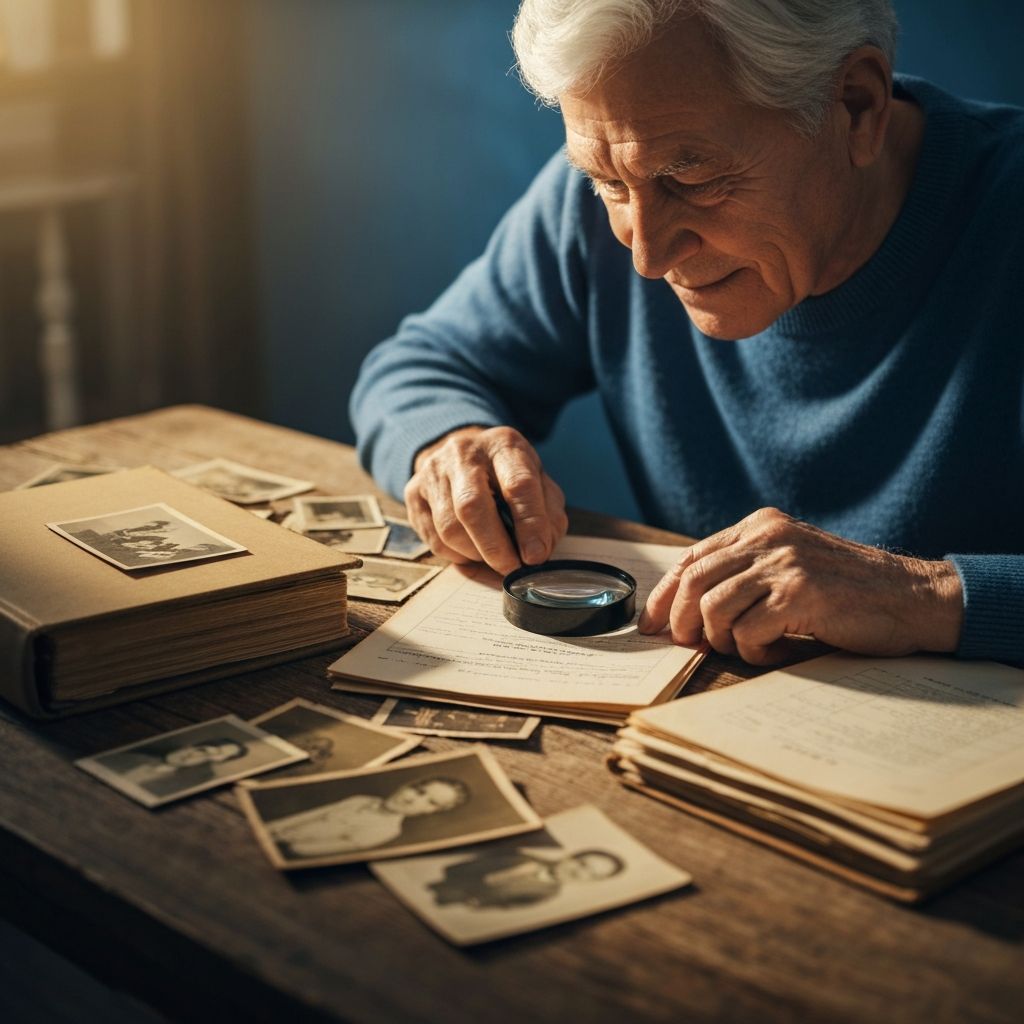
4. Dig into Old Photos and Keepsakes
Photographs, letters, and keepsakes are powerful tools for sparking memories and adding authenticity to your story.
Here's how to use them effectively:
5. Research the Context of Your Life
Your biography isn't just about your personal experiences—it's also about the time and place in which you lived. Researching historical, cultural, or societal details can help your readers better understand your story.
Here are some examples:
Use books, documentaries, and online resources to add context to your story. Libraries are also a great source of local history.
6. Look at Public Records and Documents
If you want to add more factual accuracy to your memoir, consider checking public records. These might include:
Online genealogy platforms like Ancestry.com can also help you discover details about your family history.
7. Interview Yourself
Set aside time to "interview" yourself as if you were a subject for a biography. Pretend you're answering questions for a journalist or historian. You'll be surprised how much detail you can uncover by talking out loud.
Record your answers or write them down. This process can help you explore feelings, motivations, and insights that might not surface otherwise.
8. Focus on Authentic Details
The little details are what make your story feel real and relatable. For example:
These small, authentic details will make your memoir more engaging.
9. Organize Your Research
Once you've gathered memories, stories, and details, you'll want to organize them. Here are a few methods:
10. Take Your Time
Writing a biography is a journey, not a race. Allow yourself the time to reflect, research, and write at your own pace. The more you invest in the process, the more rewarding the final result will be.
Ready to dive in? Start with our 100 Questions to Jump-Start Your Biography and begin uncovering the stories that shaped your life. Remember, your story is worth telling—and there's no better time to start than now.